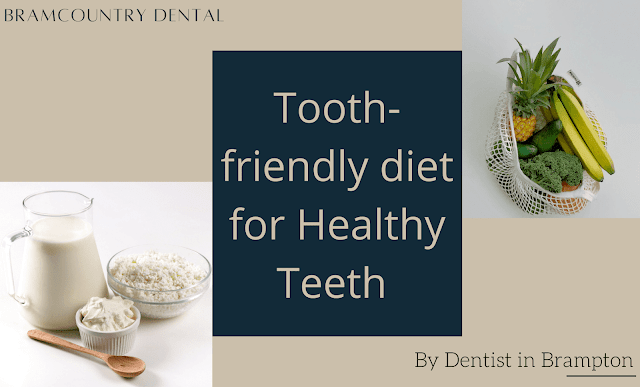
Brushing your
teeth twice a day and flossing are essential for the health of your teeth. But
how tooth-friendly is your refrigerator?
Avoiding sugary
and acidic foods becomes a lot easier when you find tasty alternatives. In
addition, chewing healthy snacks keeps plaque out and can work wonders. Here best
tooth friendly diet for healthy teeth suggested by Brampton Dentist.
Cheese
Even if the
sticky cream pudding is calling out loudly for you - you'd better opt for the
cheese platter. The acid-neutralizing effect protects the tooth enamel and thus
reduces the risk of tooth decay.
Did you know that
the risk of plaque increases when the pH drops below 5.5? On the other hand,
cheese consumption increases the pH value in the mouth as the milk product
neutralizes the acid.
It also has a
high calcium content, which nourishes and strengthens tooth enamel.
By the way:
Adults need around 700 mg of calcium every day. 30 g of cheese, therefore,
already covers 32 per cent of your daily needs!
Yogurt
Packed with
protein and tooth-strengthening calcium, even a small dollop of unsweetened Yogurt
can do wonders. Try sugar-free, plain, or Greek Yogurt for breakfast, a late
afternoon snack, or even a healthy dessert.
Similar to
cheese, Yogurt balances the pH of your mouth and neutralizes any plaque acid.
Its calcium content helps rematerialize the most robust substance in your body:
your tooth enamel.
The hard truth?
Tooth enamel cannot grow back, so it is particularly important to eat a diet
rich in calcium to protect it.
Carrots and celery
The natural
toothbrush gear: raw carrots and celery sticks. The crispy factor of these two
fibre-rich vegetables has a cleansing effect and is a natural abrasive for your
teeth.
It also
stimulates your gums to keep them firm and healthy. The naturally chewy texture
of the celery means it takes longer to chew, which promotes your
salivation.
The same goes for
munching crunchy carrots. The stimulated saliva flow washes away food particles
and bacteria that would otherwise remain in your mouth, thus preventing tooth
decay. Saliva also contains an enzyme that neutralizes the acid.
Dark leafy vegetables
Greens are not
only good for your general well-being but also your teeth, says "Dentist Countryside Dr." Leafy vegetables such as
spinach, kale, cabbage and broccoli contain many minerals such as magnesium,
vitamin C, vitamin K (ideal for binding calcium) and beta-carotene. The latter
allows your body to absorb vitamin A while promoting the flow of saliva in your
mouth.
Fresh fruits
Sticky sweet
treats and says hello to fresh fruit. The skin and pulp of an apple, for
example, are very rich in fibre. It also stimulates the flow of saliva, similar
to chewing carrots or celery sticks.
Apples can
incidentally also help bad breath to fight. It is because their natural fibre
removes plaque and debris that is on the back of the tongue.
Oranges are a
different healthy snack that has to be observed. Plus: its vitamin C content is
excellent for the gums. Vitamin C
helps your teeth grow and repair and strengthens bones and cartilage
tissue.
Proteins
Dentist Countryside Dr recommends lean meat, fish,
seafood and tofu is not only valuable sources of protein; they are also sources
of phosphorus. Phosphorus plays an important role in building and maintaining
healthy teeth and bones in both children and adults. Did you know that calcium
needs phosphorus to strengthen bones? Without phosphorus, our calcium intake
would be useless.
Cheers to the water
A healthy,
tooth-friendly diet includes drinking, drinking and drinking. In particular,
water containing fluoride (mostly found in tap water) is very beneficial for
your oral health, protecting the tooth enamel.
Recent research
has shown that fluoride in tap water reduces tooth decay in children and adults
by 25 per cent!
The bad guy: sugar
Don't drink with
a high sugar content like energy drinks, fruit juices, carbonated drinks, and
even smoothies. When you drink, the bacteria in your mouth meet the
sugar.
In the process,
acids have produced that attack the tooth enamel. The loss of tooth enamel
caused by food acids can lead to tooth discoloration and increased sensitivity.
Sugary drinks
aren't the only culprits who will want to mess with your bright smile. Be
careful with alcohol and dark drinks. The glass of red wine or mixed drink may
taste good for the moment, but it can also damage your tooth enamel.
Moderation is the
key. If you feel like drinking alcohol, drink from a straw, so sugar and acid
do not get on your teeth. If there are no straws, take turns sipping your
alcoholic drink with water and trying to rinse your mouth afterwards. Be sure
to wait an hour after drinking before brushing your teeth with fluoride
toothpaste. It gives your tooth enamel time to recover.
Don't
forget: Tooth-friendly nutrition is no substitute for thorough dental
care! So always remember to brush your teeth with fluoride toothpaste at least
twice a day, floss and replace sugary snacks with tooth-friendly foods.
If you want to
treat yourself to something, that's perfectly fine. However, it is better to
have a large dessert after dinner instead of sugary snacks and drinks
throughout the day.
Comments
Post a Comment